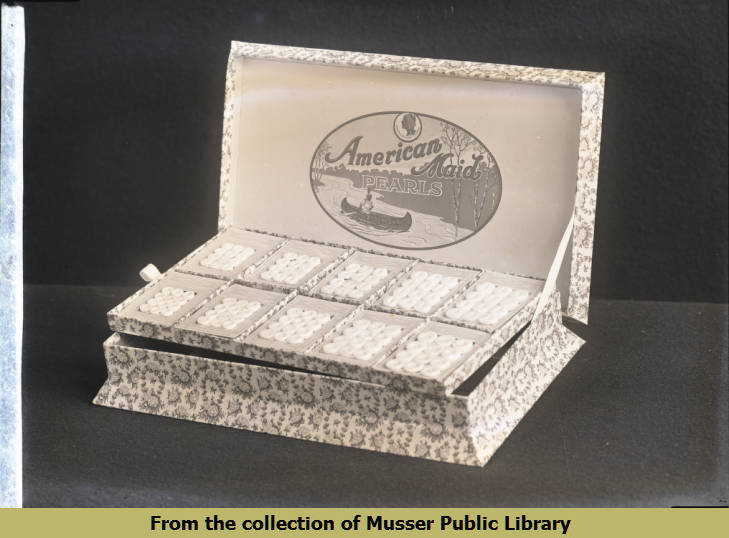
Last week I came across an interesting article about how a small town in Iowa became the Pearl Button Capital of the World. During the Victorian age and earlier, people used natural materials for buttons – such as wood and horn. Pearl buttons on clothing were considered a status symbol and prized for their beautiful luster. They also brought in a sizable profit for the button manufacturers.
The pearl button industry began in Muscatine, Iowa when a German immigrant by the name of John F. Boepple started a button factory in 1891. He had a business in Germany making buttons, but the high tariffs charged on ocean shell caused his business to fail. When he arrived in the United States he began searching for a sustainable source of excellent mussel shells, which he found in the Mississippi River near the town of Muscatine, Iowa. Innovations in the machinery used to cut the shell into buttons helped to make the venture a success. Only six years after Boepple launched the industry, there were dozens of button cutting shops in Muscatine. By 1905 the town was producing 1.5 billion pearl buttons annually using mollusk shells from the Mississippi River and other rivers in the Midwest. Nearly two-thirds of the town’s 18,000 residents were employed in some aspect of the pearl button industry.
The pearl button industry employed thousands of mussel fisherman called clammers. With a minimal start-up cost, the huge demand for shell, and the potential to find freshwater pearls in the clams – clamming became the “gold rush” of the Midwest. Clammers and their families set up river-side camps. The men worked the shell beds, while the women and children steamed open the mussels, removed the clams, and separated the shells. Clammers first worked the mussel shell beds near Muscatine, then spread into nearby states as the industry grew and the shell beds became depleted.
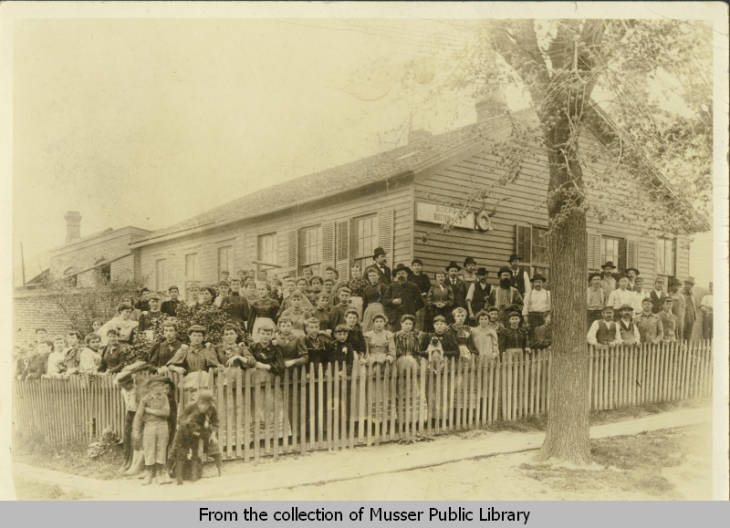
Most of the people employed in the button industry worked six ten-hour days. Earnings were based on piecework wages. The most common job for the men was operating a shell cutting machine and earned between $12 to $19 per week in 1901. Women often worked in the large finishing plants earning around $8 per weekre. Women with small children often elected to sew finished buttons on cards from home, instead of working in a factory.
You can visit Iowa’s pearl button museum in Muscatine, Iowa. For more information see http://www.muscatinehistory.org.
 The Victorian Shoppe